Cal Newport is a computer science professor at Georgetown University, a productivity expert and an author.
Has AI “workslop” damaged our ability to focus? When AI entered the workplace, many thought it would replace knowledge workers. Instead, we’re flooded with AI-generated noise that feels productive but often isn’t. In this new era, is the real competitive advantage simply the ability to focus?
Expect to learn what the future of work will be with major advancements in AI, what most people’s relationship with productivity is like at the moment, why your ability to focus is becoming increasingly more important, how people should deal with a lot of work messages, if new AI tools actually have been as transformative as they have claimed to be, if AI in the workplace has been a huge disappointment so far and why and much more…
Mentioned Books
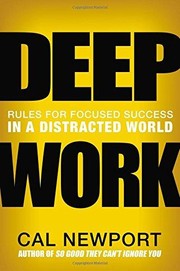
One of the most valuable skills in our economy is becoming increasingly rare. If you master this skill, you'll achieve extraordinary results. Deep work is the ability to focus without distraction on a cognitively dema…
“Dude, you must be feeling like Cassandra at the moment. So pressy and the distraction, the necessity of deep work, the inherent bombardment of our attention. Do you feel like you saw the future earlier than what even at the time maybe felt late with deep work and focusing on”
In the Book. Proust and the Squid: The Story and Science of the Reading Brain, Harper Perennial, 2008. This is an account of how our brains change as we learn to read.
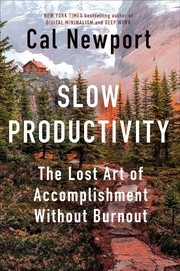
Our current definition of “productivity” is broken. It pushes us to treat busyness as a proxy for useful effort, leading to impossibly lengthy task lists and ceaseless meetings. We’re overwhelmed by all we have to do and…
“It wasn't seen to be more productively stumbled into it. So we really should change. So that was that book. And then the most recent book, Slow Productivity from a couple of years ago. In that book, I argued, oh, wait a second, workload matters too. The other issue of this problem is we don't put”
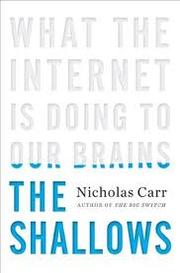
Examines the influences computer-delivered information may have on human cognition using Marshall McLuhan as the hook, the history of communication as the trajectory, and brain science as the tool.
“type the issue is I mean there's a lot of this research we've known since the 90s a lot of this is captured in um the best book on this would be uh the shallows Nick Kars book the shallows when we're reading something like a web page or sub-stack for whatever reason uh we skim much”